Data Privacy When Using LLMs in Your Business
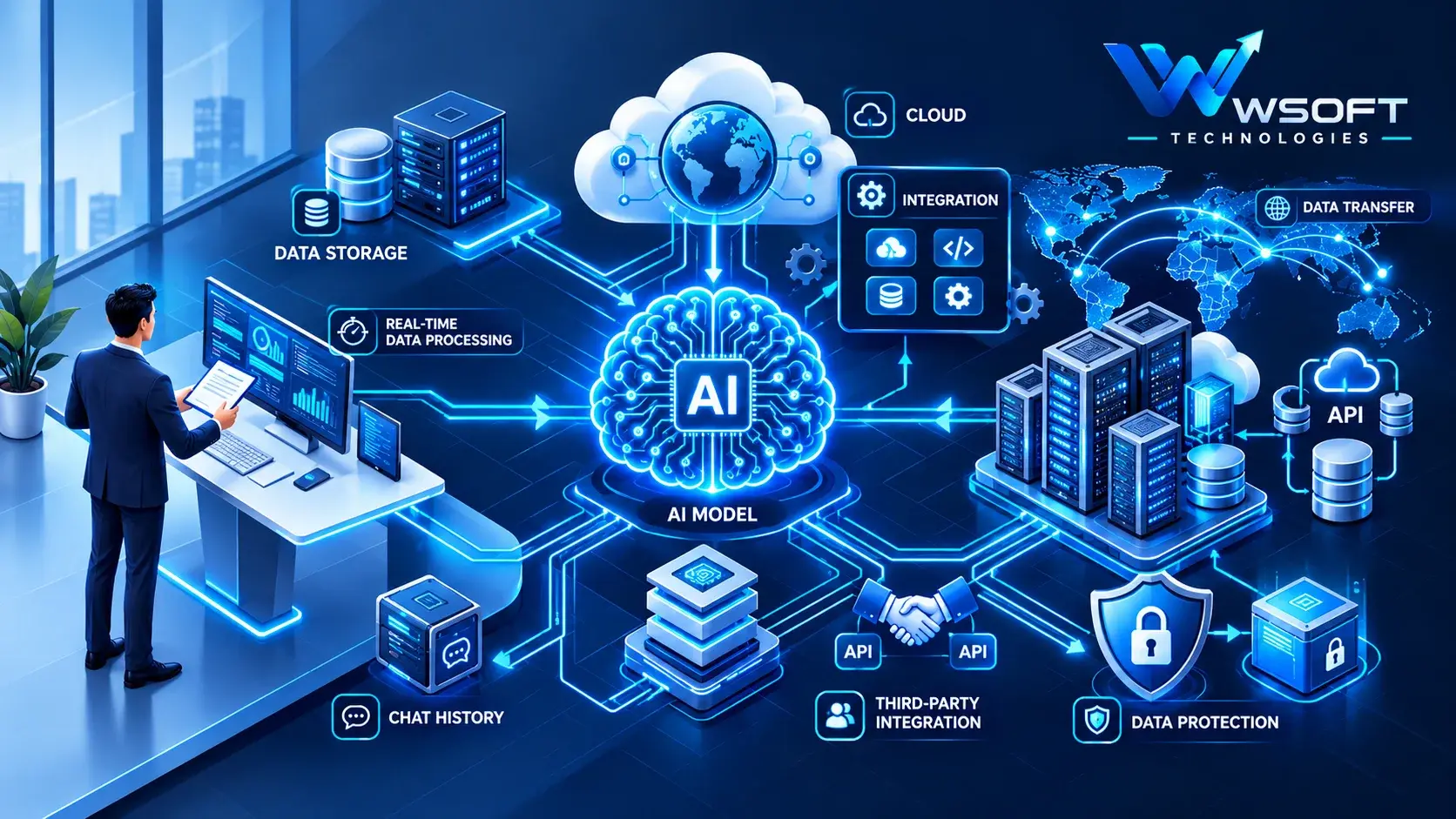
Large language models (LLMs) can help businesses write emails, summarize contracts, answer customer questions, and automate everyday tasks. However, these tools may also handle sensitive information, such as customer details, financial records, health information, and confidential business plans.
Sharing this information without the right safeguards can put your business and customers at risk.
Understanding LLM privacy risks is essential for any business using AI. This guide explains how AI tools handle your data, the main privacy risks to watch for, and practical ways to protect sensitive information. It also covers important rules, including GDPR and HIPAA, that may apply to your business.
This blog gives you general information, not legal advice. Consult a qualified legal or compliance professional about your specific requirements.
Why Data Privacy Matters When Using LLMs
Traditional software usually follows set instructions to process information. LLMs work differently because users can enter almost anything into a prompt, including text copied from emails, customer records, or business documents.
Someone might share private information without realising that it could be sent to an external AI provider.
Poor data protection can lead to:
- Legal penalties: Breaking data protection rules can result in fines.
- Loss of customer trust: People may lose confidence in a business that exposes their information.
- Leaked business information: Confidential plans, source code, or company records could be exposed.
- Contract problems: Sharing client information with an unapproved service may break an agreement.
Data privacy should be part of your AI plan from the beginning, not something you address after a problem occurs.
What Happens to Your Data When You Use an LLM?
When you enter a question or instruction into an AI tool, your text is usually sent to the provider's systems for processing. The provider then returns a response.
Depending on the service, your information may also be:
- Saved in chat history.
- Kept temporarily for security checks or troubleshooting.
- Used to improve AI models, depending on the provider, account type, and settings.
- Processed or stored in another country.
- Shared with other service providers that help run the system.
Different AI tools have different privacy policies. A personal account, business subscription, and API service may all handle data differently.
Before using an AI tool for business information, check what data it keeps, how long it keeps it, who can access it, and whether it can use your information to improve its models. Never assume your data is private simply because a tool is popular.
Common LLM Privacy Risks
Understanding the main risks can help your business choose safer AI tools and prevent avoidable mistakes.
Data Leaks Through AI Tools
Data leaks in LLMs happen when private information becomes available to people or systems that should not have access to it.
This can happen when:
- Employees paste confidential documents into unapproved AI tools.
- Private information is saved in chat histories or system logs.
- An AI assistant retrieves documents that a user is not allowed to view.
- An AI model repeats sensitive information it has learned or received.
For example, an employee might paste a customer database into a public AI chatbot to create a report. If the tool is not approved for that data, the employee may expose information the business has a duty to protect.
Use approved AI tools, limit access to sensitive information, and remove private details before sharing text with an AI model.
Employees Using Unapproved AI Tools
Some employees use personal AI accounts or unfamiliar tools because they make work faster. This is often called shadow AI.
The problem is that the business may not know which tools are being used or how they handle company information.
Give employees approved AI tools that meet your privacy requirements. Create simple rules explaining which information can and cannot be shared.
Hidden Instructions That Trick AI Systems
An email, webpage, or document can contain hidden or misleading instructions designed to make an AI agent ignore its rules, reveal information, or perform an unwanted action. This is known as prompt injection.
The risk increases when an AI system can access private files, business accounts, or external tools.
Treat information from outside sources as untrusted, limit what the AI can access, and require human approval before sensitive actions are completed.
Collecting or Keeping Too Much Data
An AI tool does not always need an entire document or customer record to complete a task. Sending unnecessary information increases the risk if that data is exposed.
Keeping prompts and records longer than necessary can create similar problems.
Share only the information needed for each task and set clear rules for how long prompts, outputs, and logs should be kept.
Risks From Third-Party Providers
AI services may rely on other companies for cloud hosting, data storage, analytics, or additional features. These providers may also handle some of your information.
Check which other companies may process your data, review the provider's security practices, and confirm that suitable contracts and safeguards are in place.
Data Protection Rules Businesses Should Know
The rules that apply to your business depend on where you operate, whose information you handle, and the type of data you process.
GDPR and AI
The General Data Protection Regulation (GDPR) applies to many businesses that process personal information relating to people in the European Union. Using AI does not remove the responsibility to protect that information.
Important GDPR principles include:
- A valid legal reason: You need a lawful basis for using personal data.
- Collecting only what is needed: Avoid sending unnecessary personal information to an AI tool.
- Using data for the right purpose: Do not reuse information in ways that conflict with the purpose for which it was collected.
- Being transparent: Explain how personal information is used when required.
- Respecting people's rights: Have a process for handling valid requests to access, correct, or delete personal information.
- Protecting international transfers: Follow the applicable rules when personal data is sent outside the European Economic Area.
- Having suitable contracts: Put the required data protection agreements in place with providers that process personal information on your behalf.
Some higher-risk uses may also require a Data Protection Impact Assessment (DPIA). The EU AI Act may introduce additional requirements depending on how an AI system is used.
Removing a person's name does not automatically make their information anonymous. Data that can still be linked to an individual may remain subject to GDPR.
HIPAA Compliance When Using LLMs
In the United States, the Health Insurance Portability and Accountability Act (HIPAA) sets privacy and security requirements for covered healthcare organisations and certain businesses working with them.
If your business handles protected health information (PHI), consider these safeguards:
- Use only AI services approved for handling the relevant health information.
- Confirm whether the provider must sign a Business Associate Agreement (BAA).
- Limit access to the information each person needs for their role.
- Keep appropriate records of access and important actions.
- Remove identifying details when appropriate and use recognised methods to protect patient privacy.
Not every AI provider or subscription supports HIPAA-regulated use. Check the exact service, plan, and contractual terms before sharing patient information.
Other Privacy and Security Requirements
Depending on your business, other requirements may apply, including US state privacy laws such as the California Consumer Privacy Act (CCPA), payment card security standards (PCI DSS), and industry-specific contracts.
Security reports and certifications, such as SOC 2 and ISO 27001, can help when assessing a provider. However, they do not automatically mean a service meets every legal requirement your business has.
Public, Private Cloud, and On-Premises LLMs
The way an AI model is hosted affects how much control your business has over its data.
Public AI Services
Public AI services are generally easy to access and quick to set up. However, your information is processed on the provider's systems.
Some business plans and API services offer stronger privacy terms, such as not using customer data to train models by default. You should still check the exact terms, retention periods, and available controls.
Private Cloud AI
A private cloud setup runs an AI system in a dedicated or controlled cloud environment. It can give your business more control over data access, storage, and security settings.
However, privacy still depends on how the system is configured and managed.
On-Premises AI
An on-premises LLM runs on servers controlled by your organisation, rather than relying entirely on an external AI service.
This can suit businesses that need greater control over confidential information or where strict data handling rules apply. However, your team becomes responsible for much of the system's security, maintenance, updates, and operating costs.
Which Option Is Best for Your Business?
The right choice depends on how sensitive your information is, your budget, and your security requirements.
A business might use a public service for general writing tasks while keeping sensitive customer records within a private environment. The important thing is to match the level of protection to the information being handled.
How to Protect Sensitive Data When Using LLMs
You do not always need to stop using AI to protect your information. The right safeguards can help your business use AI while reducing unnecessary exposure.
Remove or Replace Private Details
Data masking for AI means replacing sensitive information with labels before sending text to an AI model.
For example, instead of sending:
"Contact Sarah Khan at sarah@example.com about invoice 48213."
You could send:
"Contact [NAME] at [EMAIL] about invoice [INVOICE_ID]."
The AI can work with the general meaning without receiving the original details. If you need to restore the real information later, keep the matching records in a secure system controlled by your business.
How to Anonymize Data Before Sending It to an LLM
If you want to know how to anonymize data before sending it to an LLM, follow these steps:
- Find sensitive information: Look for names, email addresses, phone numbers, account numbers, health details, and other identifying information.
- Use tools to detect it: Automated checks can find common personal details that a person might overlook.
- Remove or replace the details: Use labels such as [NAME] or [ACCOUNT_NUMBER], or remove the information if it is not needed.
- Check other identifying clues: A job title, location, and specific date together might identify someone even without their name.
- Review the result: Check samples to make sure sensitive information has not been missed.
- Protect any matching records: If the original details need to be restored later, keep the matching information in a secure location outside the AI prompt.
There is an important difference between pseudonymized and anonymized data.
Pseudonymized data has identifying details replaced, but a person may still be identified using separate information. It generally remains personal data under GDPR. Truly anonymized data cannot reasonably be linked back to an individual, which can be difficult to achieve in practice.
Apply Strong Access Controls
Not every employee or AI assistant needs access to every company record.
Give each user and system access only to the information required for its tasks. Review permissions regularly and remove access when it is no longer needed.
Protect Stored and Transferred Data
Use suitable security measures to protect information while it moves between systems and while it is stored. These commonly include encryption, secure authentication, and controlled access to records.
Limit Data Storage and Model Training
Check whether your provider allows you to control how long information is kept. Disable the use of your data for model training where appropriate and available, and remove records that are no longer needed.
Review AI Inputs and Outputs
Check what information goes into the AI system and what comes out. This can help identify accidental disclosures, unsafe responses, and other problems before they affect customers.
Enterprise AI Security Best Practices
Good enterprise AI security involves more than choosing a secure AI model. Your tools, employees, policies, and day-to-day processes all matter.
Follow these practical steps:
- Provide approved tools: Give employees safe AI options that meet your business requirements.
- Create a clear AI policy: Explain what staff can and cannot enter into AI systems.
- Train your team: Teach employees how to recognise sensitive information and avoid unsafe sharing.
- Control account access: Use secure sign-in methods and permissions based on each person's role.
- Monitor usage: Review appropriate activity records and investigate unusual behaviour.
- Prepare for incidents: Create a clear plan for responding to accidental data exposure or a security breach.
- Review your safeguards: Recheck your tools, settings, and provider terms as they change.
These measures help employees use AI productively without treating privacy as an afterthought.
AI Vendor Risk Assessment: Questions to Ask
Before choosing an AI provider, carry out an AI vendor risk assessment to understand how the company handles your information.
Ask these questions before signing a contract:
- Is our data used to train AI models?
- How long are prompts and responses stored?
- Where is our information processed and stored?
- Which other companies may access or process our data?
- Can we sign the required data protection agreements?
- Is a Business Associate Agreement available if we handle health information?
- What security measures protect our information?
- Can the provider meet our data location requirements?
- How quickly will the provider notify us about a data breach?
- Can we request data deletion, and how is deletion confirmed?
- Does the provider offer security reports or allow suitable audits?
Ask for clear written answers and keep them with your vendor records. Do not rely on general marketing statements when making privacy decisions.
Data Privacy Checklist for LLM Use
Before introducing an LLM into your business, check that you have:
- Identified the types of data your business handles.
- Chosen an AI service that suits your privacy requirements.
- Reviewed the provider's security practices and data handling terms.
- Signed the required contracts and agreements.
- Removed or replaced sensitive details where appropriate.
- Set access permissions and limited unnecessary data sharing.
- Reviewed data storage periods and model training settings.
- Created a clear AI usage policy for employees.
- Set up suitable activity records and an incident response plan.
- Checked applicable GDPR, HIPAA, and other legal requirements with a qualified adviser.
Completing this checklist can help you identify gaps before AI tools become part of your everyday business operations.
Frequently Asked Questions
Is It Safe to Use LLMs With Company Data?
Yes, if the service is suitable for your data and you apply proper security controls. Avoid sharing confidential information through unapproved AI tools.
Do LLMs Store or Train on the Data You Send?
It depends on the provider, service, and settings. Check its data retention and training policies before sharing business information.
How Can I Prevent Data Leaks When Using LLMs?
Use approved tools, remove sensitive details, restrict access, train employees, and monitor how AI systems handle information.
Is Anonymized Data Exempt From GDPR?
Truly anonymized data generally falls outside GDPR, but pseudonymized data usually remains covered. Proper anonymization can be difficult.
Can I Use an LLM With Patient Data Under HIPAA?
Only when the service and your use meet applicable requirements. Check vendor approval, required agreements, and security safeguards before sharing patient information.
When Should a Business Use an On-Premises LLM?
Consider it when your business needs greater control over sensitive data or has strict security requirements. Also account for setup costs, maintenance, and ongoing security responsibilities.
Final Thoughts
LLMs can help businesses save time, improve services, and automate everyday work. However, these benefits should not come at the expense of customer privacy or confidential business information.
Understand where your data goes, choose providers carefully, remove unnecessary sensitive details, control access, and give employees clear rules for using AI. Make sure your safeguards also meet the legal requirements that apply to your business.
With the right approach, you can use AI more confidently while reducing the risk of exposing important information.
WSoft Technologies helps businesses develop AI-powered solutions, including LLM integrations, AI agents, and systems that connect AI with business information. Explore our AI and software development services or contact our team to discuss your project.
Have a project in mind?
Talk to the Wsoft Technologies team by phone or WhatsApp.