Enterprise Software Development Services: How to Choose the Right Company
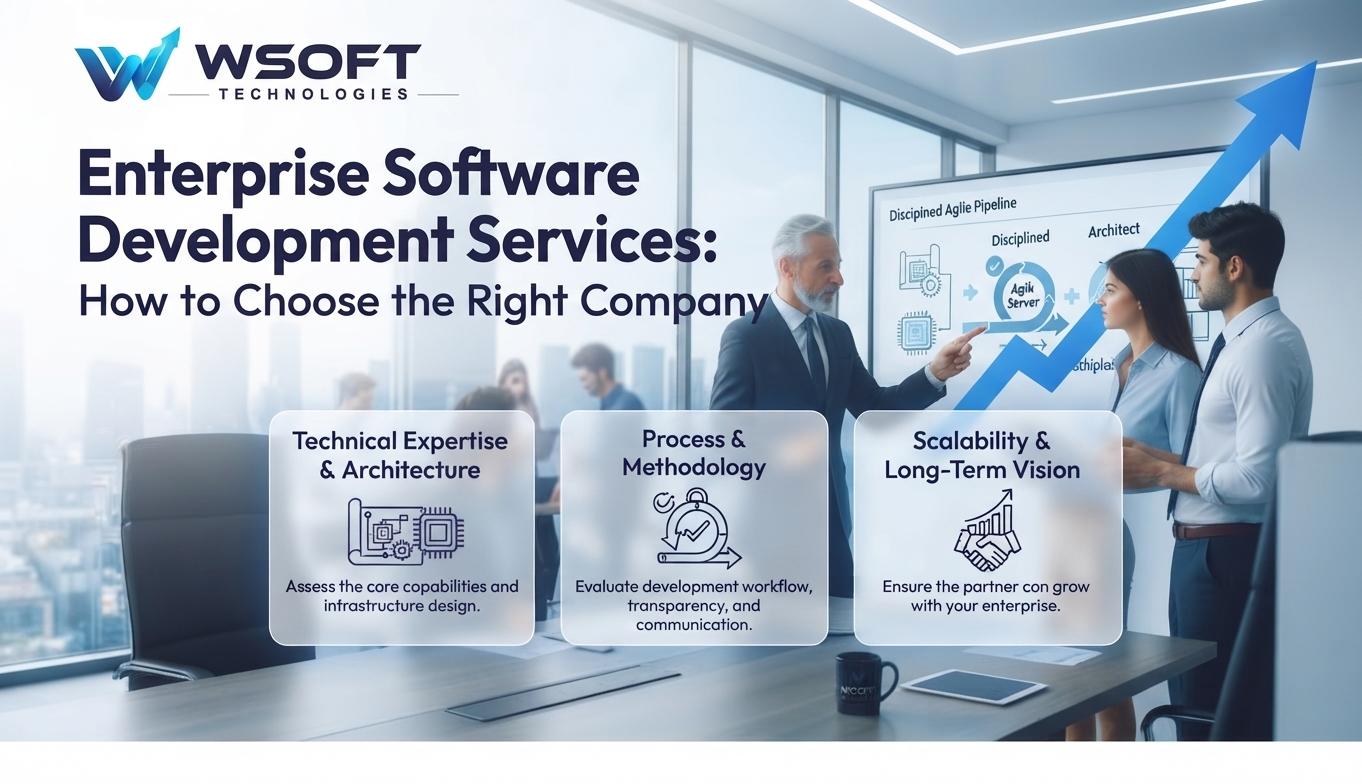
Enterprise software development is the process of building software specifically for large organizations, covering the internal systems, customer platforms, and data tools that a big company runs on every day. It differs from regular software development mainly in scale. The code has to work for thousands of users, connect to older systems already in place, and meet security and compliance rules that a small business rarely has to consider.
The main benefit of hiring the right team for enterprise software development services is that a well-built system keeps running as the company grows, instead of turning into a bottleneck later.
A good enterprise application development services provider plans for change from the start, so a new feature or a merger with another system does not mean starting over. Grand View Research expects the global enterprise software market to pass $517 billion by 2030, growing more than 12% a year. This reflects the growing investment organizations are making in modernizing and replacing outdated internal tools.
Choosing the right partner matters because enterprise software projects can be complex and expensive to change once development is underway. The qualities below can help businesses evaluate development companies beyond a low quote or a fast turnaround promise.
Many large organizations already have an internal IT department, so bringing in outside help for enterprise software development is often less about lacking skill and more about lacking spare capacity. Internal teams are usually occupied keeping existing systems running, and adding a large new project on top of that workload can lead to longer timelines and higher costs.
An external team dedicated to the new system can work alongside internal staff rather than replacing them, helping organizations manage a large development project while their existing teams continue handling day-to-day responsibilities.
How to Choose an Enterprise Software Development Company
Choosing an enterprise software development company requires more than reviewing a portfolio or comparing project quotes. The right provider should have relevant experience, a clear development process, strong security practices, a capable team, and a plan for supporting the software after launch.
Here are the main factors to consider.
A Proven Track Record in Enterprise Software Development
A company earns trust in enterprise software development by showing finished projects, not simply by describing its process.
Review two or three examples of systems built for organizations of a similar size and, where possible, check whether those systems are still in use. A firm that has shipped real, working systems for large organizations understands the maintenance and support work that follows a launch, not just the build itself.
References can also provide useful information that may not appear on a portfolio page. A system can look impressive in a case study but still face problems when it has to handle real users, real data, and changing business requirements.
Real Custom Enterprise Software Development Experience
Custom enterprise software development means the system is designed around how a business actually works rather than adapted from a template built for someone else.
A team with real custom development experience should ask detailed questions about current workflows before writing code. It should also be willing to identify areas where a business process could be simplified instead of simply automating every existing step.
This helps distinguish genuine custom development experience from firms that mainly configure or customize existing platforms. True custom development starts with the business problem and requirements.
Enterprise Application Development Services Built to Scale
Enterprise application development services need to handle real-world growth, including more users, more data, and more integrations than the system may have on its first day.
Planning for scale early through database selection, hosting infrastructure, and software architecture can reduce the risk of rebuilding the system later. A system may work well when usage is low but struggle once the number of users or amount of data increases significantly.
Ask a development company how it plans for future growth and what decisions it makes during the early architecture stage to support that growth.
Security and Compliance From Day One
Enterprise systems often handle sensitive business or customer data, so security should be considered from the beginning rather than added immediately before launch.
A development provider should discuss requirements such as data residency, access controls, and audit logging early in the project. These requirements can then be incorporated into the software architecture.
Retrofitting security into a finished system can be more disruptive than designing the system with security requirements from the start. Businesses should therefore ask potential development partners how security is handled throughout development, testing, deployment, and ongoing maintenance.
A Dedicated Team Instead of a Rotating Group of Contractors
Enterprise software development companies can differ significantly in how they staff projects.
Some assign a stable team that stays with a system throughout its development and ongoing support, while others rotate contractors between projects. A dedicated team can retain important knowledge about the business, technical decisions, and software architecture over time.
This becomes especially important when a system remains in active use for many years. When project knowledge is spread across constantly changing team members, important decisions and context can become harder to maintain.
A Clear, Documented Development Process
A trustworthy enterprise software development agency should be able to explain how work moves from an initial requirement to a released feature.
Ask how the company handles:
- Requirements gathering
- Sprint planning
- Development
- Code reviews
- Testing
- Bug reporting
- Quality assurance
- Feature releases
A clear process makes it easier for a business to understand what is happening throughout the project and how progress will be measured.
Support That Continues After Launch
The work is not finished when an enterprise system goes live.
Before signing a contract, ask what support looks like after launch. Important questions include:
- How are bugs handled?
- What are the expected response times?
- Who monitors the system?
- Who handles updates?
- How are new features added?
- What happens if the system needs changes several months later?
Ongoing support and maintenance should be considered part of the overall software lifecycle rather than something that only becomes relevant after a problem occurs.
Custom Enterprise Software vs. Off-the-Shelf Software
Before choosing a development company, businesses should also decide whether they actually need custom software or whether an existing product can meet their requirements.
What Counts as Custom Enterprise Software Development Services?
Custom enterprise software development services cover software built specifically for one organization.
This can include:
- Internal business tools
- Customer-facing platforms
- Integrations between existing systems
- Business dashboards
- Data management systems
- Software that connects information from multiple platforms
This differs from standard off-the-shelf software such as common CRM or accounting platforms. Even when an off-the-shelf platform is heavily configured, its underlying code was not originally developed for one specific business.
How Enterprise Custom Software Development Differs From Off-the-Shelf Tools
Enterprise custom software is designed around existing business workflows, while off-the-shelf tools generally require a business to adapt its processes to the way the software works.
Off-the-shelf tools can be cheaper and faster to set up, making them useful for common requirements such as email, accounting, or basic business management.
Custom development can become more appropriate when a company's processes are specific enough that existing software requires extensive workarounds, or when several separate tools are being used simply to fill gaps between systems.
The right choice depends on the organization's requirements, budget, existing technology, and long-term plans.
How Enterprise Software Companies Price a Project
Enterprise software companies typically use either a fixed-price model for a defined scope or an hourly or monthly rate for a dedicated development team.
A fixed quote can provide greater cost certainty once the project scope and requirements are clearly defined. This approach can work well when the organization knows exactly what it wants to build.
An hourly or monthly dedicated team can be more flexible when requirements are expected to change. This can be useful for platforms developed in phases or projects where new requirements may emerge during development.
Neither pricing model automatically fits every project. The appropriate approach depends largely on how clearly the requirements are defined and how likely the scope is to change.
How Much Does Enterprise Software Development Cost?
Enterprise software development can range from around $50,000 for a focused internal tool to more than $500,000 for a large platform with multiple integrations and ongoing support.
The actual cost depends on several factors, including:
- Number of integrations
- Complexity of the data
- Number of users
- Custom functionality
- User interface requirements
- Security and compliance requirements
- Development team size
- Ongoing support requirements
A fixed-price quote can work well when requirements are clearly defined, while an hourly or monthly dedicated team can provide more flexibility when the project is expected to change over time.
How to Shortlist Enterprise Software Development Companies
A practical starting point is to create a shortlist of three or four enterprise software development companies with public case studies relevant to your industry or project type.
Ask each company the same core questions about:
- Previous enterprise projects
- Team structure
- Custom development experience
- Security practices
- Development process
- Post-launch support
- Pricing model
- How scope changes are handled
Using the same questions makes it easier to compare the information you receive.
Pay attention to how clearly each company explains its process. If important questions receive vague answers during the selection stage, it may be difficult to get clear information once the project begins.
Enterprise Software Development Agency vs. In-House Team
Businesses can develop enterprise software using an external development agency, an internal team, or a combination of both.
When an Enterprise Software Development Agency May Make Sense
An external agency may be useful when:
- A full development team is needed quickly
- The project requires skills that the internal team does not have
- The project has a defined timeline
- The business does not want to hire a permanent team for a specific project
When an In-House Team May Make Sense
An in-house team may be appropriate when software is central to the company's product or operations and ongoing development is expected indefinitely.
An internal team can retain long-term knowledge of the organization's technology, processes, and product requirements.
When a Hybrid Approach Works
Some organizations use both approaches.
For example, an external development agency may help build the initial system while an internal team gradually takes over maintenance and future development once the platform is stable.
The appropriate approach depends on the organization's existing skills, project requirements, budget, and long-term plans.
Enterprise Software Development Checklist
Before choosing an enterprise software development company, make sure you have considered:
- Relevant enterprise development experience
- Custom software development experience
- Scalability and architecture
- Security and compliance
- Development team structure
- Development and testing process
- Communication and documentation
- Post-launch support
- Pricing model
- Relevant case studies and references
- Long-term maintenance requirements
Taking the time to review these areas can help you understand what a development company actually offers before signing an agreement.
Frequently Asked Questions About Enterprise Software Development
What counts as custom enterprise software development services?
Custom enterprise software is software built specifically for one organization. Examples include internal business tools, customer-facing platforms, system integrations, dashboards, and applications designed around specific business processes.
How does custom enterprise software differ from off-the-shelf software?
Custom software is developed around a company's specific workflows and requirements. Off-the-shelf software is built for a wider market and usually requires businesses to adapt their processes to the available features.
How much does enterprise software development cost?
Enterprise software development can range from around $50,000 for a focused internal tool to more than $500,000 for a larger platform with multiple integrations and ongoing support. The actual cost depends on the project's complexity, integrations, data requirements, features, security needs, and support requirements.
How do I shortlist enterprise software development companies?
Start with three or four companies that have relevant case studies and enterprise development experience. Ask each company about its previous projects, team structure, security practices, development process, pricing model, and post-launch support.
Should I hire an enterprise software development agency or build an in-house team?
The answer depends on your organization's requirements. An agency can provide a development team and specialized expertise without requiring permanent hiring, while an in-house team can provide long-term ownership and knowledge of the company's software. Some businesses use a combination of both.
Ready to Build an Enterprise System?
Choosing an enterprise software development partner requires looking beyond price and delivery promises. Experience, custom development capabilities, scalability, security, team structure, development processes, and ongoing support all deserve attention before you sign a contract.
Wsoft Technologies builds custom software, AI agents, and scalable platforms for growing businesses. If you are planning an enterprise software project, you can discuss your requirements, timeline, scope, and team structure with the Wsoft Technologies team.
Start a project to discuss your enterprise software requirements and the development approach that fits your project.
Have a project in mind?
Talk to the Wsoft Technologies team by phone or WhatsApp.