Risks of Outsourcing Software Development: How to Avoid Them
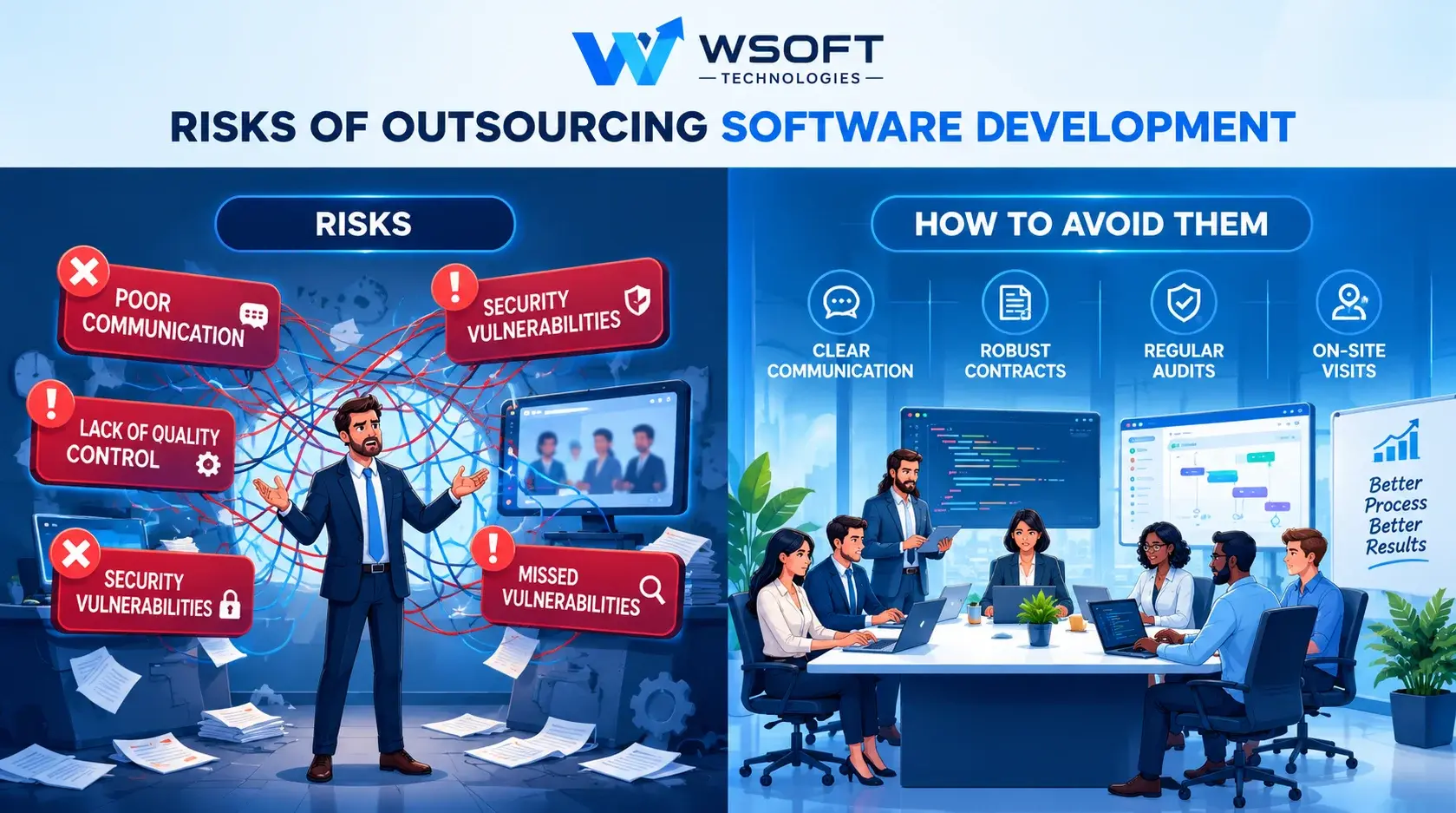
Software development outsourcing allows businesses to work with external developers or software development companies instead of building a complete in-house team. It can provide access to technical expertise, reduce hiring pressure, and help businesses develop digital products more efficiently.
However, outsourcing software development also comes with risks. Problems with communication, security, software quality, costs, deadlines, and project management can affect the outcome.
Understanding these risks before starting a project can help businesses make better decisions and avoid costly mistakes. In this guide, we explain the most common risks of outsourcing software development and practical ways to reduce them.
What Are the Risks of Outsourcing Software Development?
Software development outsourcing risks are potential problems businesses may face when working with an external development company or team.
These risks can include:
- Communication problems
- Data security and privacy concerns
- Poor software quality
- Unexpected costs
- Project delays
- Lack of transparency
- Dependence on the outsourcing provider
- Technical skill gaps
- Intellectual property and legal issues
Many of these risks can be reduced through careful planning, clear agreements, regular communication, proper testing, and choosing the right development partner.
Communication and Language Barriers
When businesses and developers work across different countries or time zones, communication can become more difficult.
Misunderstood requirements may lead to features that do not meet expectations. Delayed responses can also slow down decisions and affect project deadlines.
How to Avoid Communication Problems
Set communication processes before development starts. Use suitable tools for meetings, project updates, and document sharing.
It is also helpful to:
- Schedule regular meetings
- Document project requirements
- Share clear feedback
- Set response expectations
- Assign a main point of contact on both sides
Clear communication helps keep everyone aligned throughout the project.
Data Security and Privacy Risks
Outsourcing may require businesses to share sensitive information with an external team. This could include customer data, business documents, source code, login credentials, or internal system details.
If this information is not properly protected, it could be exposed to unauthorized people.
How to Avoid Data Security Risks
Before sharing sensitive information, review the provider's security practices.
Businesses should also:
- Limit access to sensitive information
- Use secure file-sharing tools
- Enable multi-factor authentication
- Protect account credentials
- Include data-protection responsibilities in the contract
- Identify the privacy laws that apply to the data
Security should be considered from the beginning rather than after development has started.
Poor Software Quality
Outsourced software may have bugs, performance problems, usability issues, or compatibility problems with existing systems.
Poor quality can increase maintenance costs and delay the product launch.
How to Avoid Poor Software Quality
Set clear quality standards before development begins.
Ask the development provider about:
- Coding practices
- Testing processes
- Quality assurance
- Code reviews
- Development standards
- Feature acceptance criteria
Important features should be tested throughout development instead of waiting until the final stage.
Hidden Costs and Budget Overruns
An initial project quote may not include every possible expense.
Additional costs can come from:
- Changes to project requirements
- Additional features
- Maintenance
- Third-party tools
- Testing
- Unexpected technical problems
Frequent changes to the original scope can also increase the final project cost.
How to Avoid Hidden Costs
Ask for a detailed cost breakdown before starting the project.
Make sure you understand:
- What is included in the price
- What is excluded
- How additional work will be charged
- Payment milestones
- How scope changes will be handled
It is also useful to keep a reasonable contingency budget for unexpected work.
Missed Deadlines and Project Delays
Outsourcing projects can be delayed because of unrealistic timelines, unclear requirements, technical problems, or slow feedback.
If developers are waiting for approvals or decisions, one delayed response can affect other project tasks.
How to Avoid Project Delays
Create a realistic timeline with clear milestones and responsibilities.
You should also:
- Break large projects into smaller tasks
- Set regular progress updates
- Identify possible delays early
- Give developers timely feedback
- Make sure your internal team is available for approvals
Good planning and regular communication can help keep development on track.
Lack of Control Over the Development Process
Businesses may find it difficult to understand what an external development team is working on if there is no clear reporting process.
Without enough transparency, businesses may not know whether tasks are progressing as planned or which problems require attention.
How to Maintain Better Control
Agree on reporting practices before development begins.
Use project management tools to track:
- Tasks
- Deadlines
- Project progress
- Issues
- Important decisions
Request demonstrations of working software and keep important project documentation accessible.
Dependence on the Outsourcing Provider
A business can become highly dependent on an outsourcing provider if the provider controls the source code, documentation, infrastructure, or specialist knowledge.
If the relationship ends, switching to another provider could become difficult and expensive.
How to Reduce Provider Dependence
Clearly define ownership of:
- Source code
- Intellectual property
- Documentation
- Project files
- Deliverables
Keep important project assets in business-controlled accounts where appropriate.
You should also require updated documentation and agree on a clear handover process.
Differences in Technical Expertise
A software development company may have strong experience in certain technologies but limited experience with the specific technology, integrations, or requirements your project needs.
This can result in technical problems, inefficient development, and additional costs.
How to Check Technical Expertise
Before hiring a provider, review their:
- Previous projects
- Relevant technologies
- Team experience
- Similar development work
- Technical capabilities
Discuss your requirements in detail. For larger projects, consider starting with a discovery phase or technical assessment before committing to full development.
Intellectual Property and Legal Issues
Software projects can involve valuable source code, designs, business processes, and other intellectual property.
If ownership terms are unclear, disagreements may arise over who owns the completed software and how it can be used.
Contracts may also need to address confidentiality, payments, termination, and data protection.
How to Avoid Legal and IP Problems
Use a written agreement that clearly defines:
- Software ownership
- Licensing
- Intellectual property rights
- Confidentiality
- Payment terms
- Responsibilities
- Termination conditions
The agreement should also explain how third-party and open-source components are handled.
For complex projects, businesses may want to seek appropriate legal advice.
Common Problems with Outsourcing Software Development
Businesses often face several outsourcing challenges at the same time.
For example, unclear requirements can lead to incorrect features and rework. Weak communication can create misunderstandings, while poor testing can leave bugs in the final product.
Other common problems include:
- Security weaknesses
- Changing project scope
- Increasing costs
- Incomplete documentation
- Poor project oversight
- Difficult handovers
Businesses can reduce these problems by documenting requirements, communicating regularly, protecting sensitive information, testing throughout development, controlling scope changes, and maintaining proper technical documentation.
Why Do Software Outsourcing Projects Fail?
Software outsourcing projects rarely fail because of one single problem.
A project may struggle because the business:
- Chooses an unsuitable provider
- Defines requirements poorly
- Underestimates the budget
- Sets unrealistic deadlines
- Fails to review progress
- Provides feedback too late
The development provider may also lack the required technical expertise or fail to communicate problems early.
A successful outsourcing relationship requires responsibility from both sides. The client should provide clear requirements, timely feedback, and business decisions, while the development team should deliver agreed work, communicate progress, and raise concerns early.
How to Choose a Software Development Outsourcing Partner
Choosing an outsourcing partner should involve more than comparing prices.
Before making a decision, review the provider's:
- Relevant development experience
- Previous projects
- Technical expertise
- Communication process
- Testing and quality assurance
- Security practices
- Contract terms
- Ongoing support
- Project reporting
- Change-management process
Ask how the provider handles project updates, scope changes, documentation, testing, and potential delays.
The right partner should understand your project requirements and have a development approach that matches your business needs and working style.
Frequently Asked Questions
What Is the Biggest Risk of Outsourcing Software Development?
There is no single biggest risk for every project. Common concerns include unclear requirements, weak communication, security gaps, poor quality, and unexpected costs.
How Can Businesses Reduce Software Outsourcing Risks?
Document requirements, check the provider's experience, use a clear contract, protect sensitive data, set milestones, test throughout development, and review progress regularly.
Is Outsourcing Software Development Secure?
It can be secure when proper safeguards are used. Businesses should assess security practices, limit access to sensitive data, use secure tools, and define data-protection responsibilities.
Why Do Software Outsourcing Projects Fail?
Projects can fail because of unclear scope, unrealistic budgets or deadlines, poor communication, inadequate testing, mismatched expertise, or insufficient project oversight.
How Can I Avoid Hidden Costs When Outsourcing Software Development?
Ask for an itemized proposal, clarify what is excluded, agree on how scope changes will be priced, set payment milestones, and keep a contingency budget.
Who Owns the Software Developed by an Outsourcing Company?
Ownership depends on the contract, applicable law, and third-party or open-source components. The agreement should clearly define ownership and licensing rights.
What Should I Check Before Hiring a Software Development Company?
Review relevant projects, team expertise, communication practices, security controls, testing processes, contract terms, maintenance options, and how the provider handles project changes.
Conclusion
The risks of outsourcing software development can include communication problems, security concerns, poor software quality, hidden costs, missed deadlines, and dependence on an external provider. These challenges can affect project results when they are not addressed early. Businesses can reduce these risks through clear requirements, realistic budgets, written agreements, regular communication, and consistent testing.
It is also important to protect sensitive data, confirm ownership of project assets, and choose a development partner with relevant experience. The goal is not simply to find a team that can build software. It is to establish a working relationship based on clear expectations, accountability, communication, and shared objectives.
Businesses considering a custom software project can explore WSoft Technologies' services and discuss project scope, timelines, security requirements, and expected deliverables before selecting a development approach.
Have a project in mind?
Talk to the Wsoft Technologies team by phone or WhatsApp.